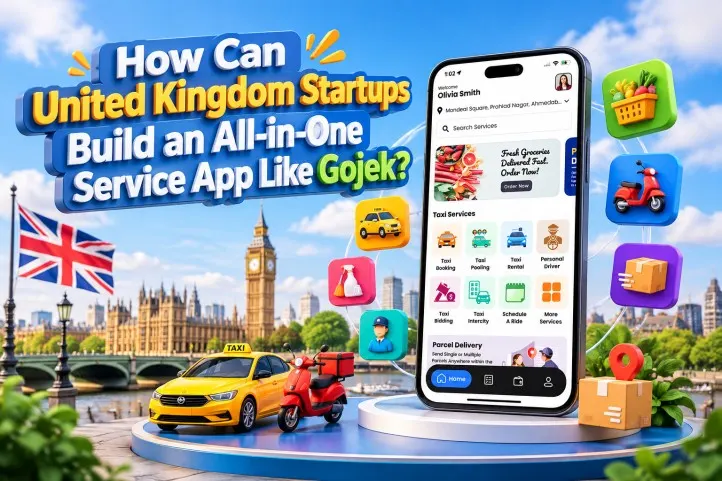
The increasing popularity of convenient digital services has led to many prospects for entrepreneurs in the UK. Developing an app like Gojek in the UK enables startups to unify a range of services, including ride-hailing, food ordering, grocery shopping, and home maintenance, in a single platform.
Customers can access all services from the same account instead of running several different apps for different services in parallel. Through this approach, startups will have the opportunity to appeal to several user segments at once while having multiple income sources.
To achieve success in this industry, it is necessary to properly evaluate the local needs, select the appropriate technology solution, and form a reliable service network that customers can trust. By relying upon V3Cube and its custom order app development services, things can become easier
Understand the All-in-One Service App Business Model
A single integrated platform provides clients with access to various services through a unified digital experience. A business can do all the operations itself or collaborate with independent service providers, restaurants, shops, and drivers.
A startup of an all-in-one service app in the UK may offer a couple of services first and expand as customer needs increase.
Common service categories include:
– Transport: Cab, taxi, and local transport.
– Food and grocery supply: Restaurant, grocery stores, and convenience goods.
– Home services: cleaning services, plumbing work, repairs, and other housework services.
– Local trade: Shopping, sending packages by courier and local deliveries.
The most significant advantage is that it is convenient for end users. They can use just one platform for different purposes, and the business can establish relations with several users across different service categories.
Research the UK Market Before Development
Utilization of market research enables startups to figure out the services that are most in demand. The need for certain services varies between London, Manchester, Glasgow, and small towns, so a single approach may not suit every location.
Before committing to the process of development, startups must consider the following:
- Customer demand: Understand typical customer needs concerning common services, booking habits, and the price level.
- Competitors: Compare the existing platforms, including the coverage of the service, fees, and customers’ experiences.
- Local partnerships: Take into account the availability of drivers, restaurants, retail, and other service providers.
- Regulatory requirements: Know about valid licensing for this type of business, consumer protection, and data protection.
Beginning with just one city or even a neighborhood may allow easier management of the whole business operation. As soon as the platform establishes a profitable customer base and service network, expansion to other regions will become feasible.
Choose the Right Multi-Service App Development Strategy
The approach for developing the product affects the time and costs necessary for launching as well as flexibility and subsequent maintenance. UK startups generally have two main options.
| Approach | Best suited for | Main consideration |
| Custom development | Businesses having highly specialized processes or technical needs | Higher flexibility, but comes with more development time and expense |
| Ready-made customizable software | Startups looking for a ready-made foundation to speed up their launch | It is important to confirm the features, integrations, and customizations available |
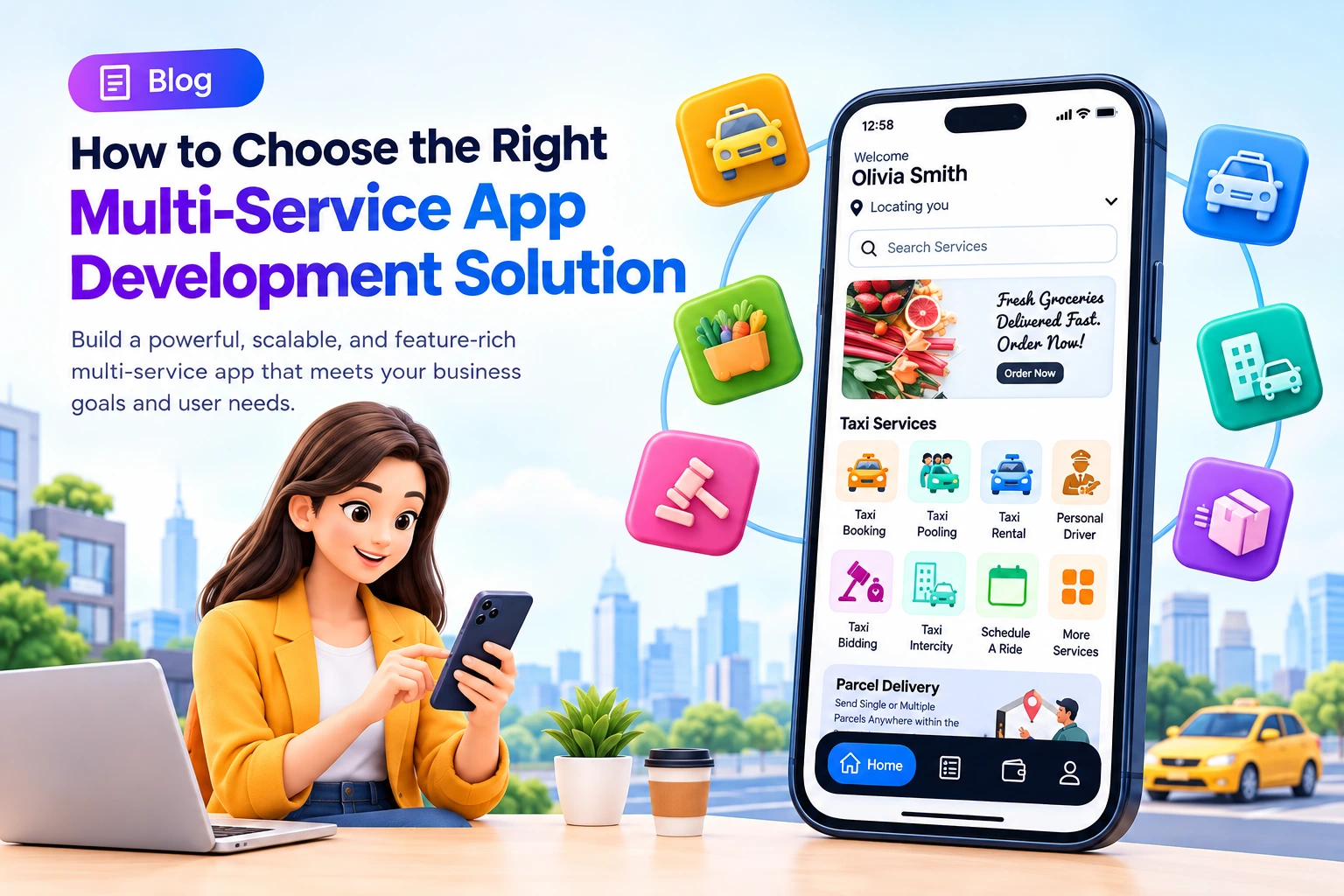
When working on multi-service app development in the UK, businesses must consider creating the customer app, as well as the interfaces for both the delivery partner/service provider and the admin panel. Moreover, the platform may be required to include functions for accepting payments, locating services, and sending scheduled notifications.
A detailed feature roadmap can prevent unnecessary spending. The startups may be launched with basic functions helping to test and validate their business model before introducing advanced capabilities.
Essential Features for a Gojek-Style Platform
To ensure its success, a multi-service platform must provide customers with easy access to available services and different management options. The main functionality of the platform must meet the needs of customers as well as business operations.
- Unified customer interface
Customers can browse available services, manage multiple profiles, save addresses, book services, and check on their order history, all done from one account.
- Booking and live updates
Customers are able to request rides, place orders, track travel, and receive updates, depending on the application being used.
- Payments and promotions
With the help of payment processing systems in place, discounts, receipts, and promotional campaigns can help attract repeat customers to use the service again.
- Administrative management
A main dashboard is needed to oversee bookings, manage service providers, configure categories of services, track payments, and evaluate performance.
The platform must incorporate sufficient security measures, an easy-to-use design, after-sales services, as well as performance that is stable over lon term. More functionalities can be added based on the business’s priorities and chosen software package.
Plan Revenue Streams and Operating Costs
A multi-service business can generate revenue by various models. Which model should be employed will depend on the services provided and agreements made with key partners.
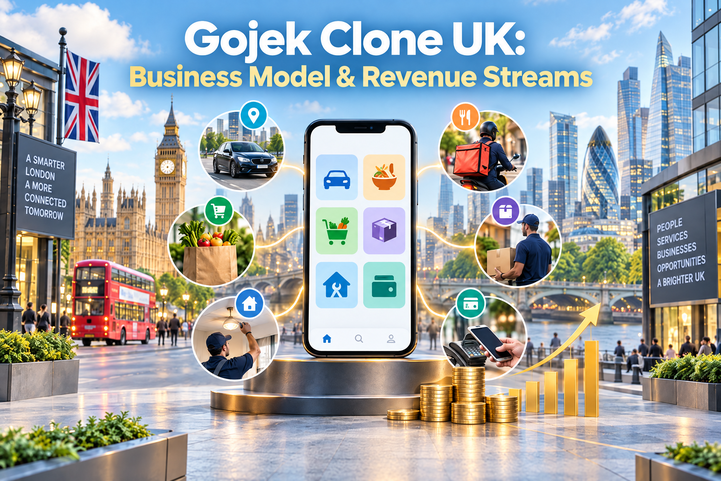
Potential revenue streams include:
- Booking commissions: A set percentage of bookings that have been completed.
- Delivery or service fee: A fee that has to do with the specific transaction performed.
- Partner subscriptions: A charge that continues for qualified businesses that use the platform.
- Featured listings: Paid visibility for participating service providers, where permitted.
- Membership plans: Optional subscriptions offering benefits such as discounts or reduced fees.
The various expenses covered by a business may involve software licenses or development, payment processing, marketing, customer support, onboarding of partners, etc. Also, transportation and delivery services contribute to the insurance, logistics, and operational expenses.
When planning an effective financial plan, businesses should make separate revenue and cost calculations for every service segment. This makes it easier to identify which services deserve further investment.
How V3Cube Can Help UK Startups Launch
V3Cube provides both ready-made and customizable clone-app solutions that can act as a foundation for businesses looking to create branded on-demand platforms. Developing each component of a platform from scratch isn’t necessarily smart for startups when they have access to existing software infrastructure to customize according to their own requirements.
A suitable Gojek Clone app in the UK solution can be evaluated for its service categories, customer and provider interfaces, administrative controls, payment integrations, and customization options..
V3Cube may offer several practical advantages when compared with a fully bespoke development route:
✔ A pre-built foundation: Can reduce the amount of software that needs to be developed from scratch.
✔ Brand customization: Helps establish a distinct business identity through supported branding and interface changes.
✔ Service-based configuration: Allows startups to assess which available modules fit their initial business model.
✔ A staged launch approach: Helps businesses consider starting with essential services before investing in wider expansion.
When businesses think about Gojek-like app development, the most essential aspect to evaluate is how well the real product fits local requirements instead of how many functionalities are going to appear in a brochure.
Launch Small and Scale With Demand
With a phased rollout plan, operational complexity is minimized, and real customers’ feedback is gathered prior to launching the operation on a larger scale.
Phase 1 – Validate: Select a certain area, analyze demand, and choose initial partners for services.
Phase 2 – Launch: Conduct the introduction of basic functions of the platform, implement support systems, and run the campaign of limited launch.
Phase 3 – Measure: Observe completed bookings, usage by repeat customers, partner activity, complaints of customers, and revenue by category.
Phase 4 – Expand: Improve the weak spots of the project, add more services, and enter new locations when the current operations become stable after a certain time period.
Services that focus on super app development in the UK must ensure that the service is dependable and meets customer trust rather than simply launching as many categories as possible all at once.
The expansion rate ultimately depends on demand, the availability of partners, and the capabilities of operations.
Conclusion
Building a multi-service platform in the UK requires proper market research, a good service strategy, reliable technology and strong partnerships with local stakeholders.
Starting with basic features and evolving accordingly to customer demand has the potential to mitigate the risks during the process of developing a sustainable business model.
V3Cube offers a viable initial solution to businesses looking for a customizable solution in terms of cloning an application, thus avoiding the need to build every component from scratch.
In order to determine whether the offered solution is suitable for launching in the UK, businesses must compare its features, integration options, price, and support options with actual offerings.
FAQs
How much does it cost to build a Gojek-style app in the UK?
The price is determined by factors such as the type of services offered, the requirements for customization, the need for integrations, as well as the development method employed.
Can a startup launch with only two or three services?
Yes. Beginning with a limited number of high-demand offerings can simplify managing partners and the quality of the services provided.
What is a Gojek Clone Script?
A Gojek Clone script is a software foundation that allows the development of a multi-service platform similar to Gojek.
Which regulations should UK startups consider?
Requirements depend on the specification of the services. Businesses need to be familiar with relevant data privacy regulations, consumer rights, payments, insurance, licenses, and regulations relevant to the industry.

Chirag Darji is the CEO of V3Cube, specializing in building on-demand mobile apps and providing mobility solutions for companies around the world. With extensive experience in strategic planning and innovation, he helps entrepreneurs worldwide launch, scale up, and grow successful digital businesses.